Navigating Consumer Contradictions: How Insights Drive Innovation in an Era
Consumers today are walking paradoxes—demanding sustainability alongside

LatAm Biz Editorial
Editorial Board
Navigating Consumer Contradictions: How Insights Drive Innovation in an Era of Paradoxical Identities
Consumers today are walking paradoxes—demanding sustainability alongside convenience, luxury with ethics. For brands, these contradictions are not obstacles but engines for innovation. Drawing from Matt Kramer’s analysis on allthingsinsights.com (February 2025) and a forward-looking perspective from mid-2026, this article uncovers the hidden economic logic behind consumer identity tensions. It explores how deep insights reshape product design, supply chain flexibility, and market dynamics. Rather than relying on outdated segmentation, forward-thinking companies use contradiction mapping to create hybrid solutions. The long-term impact extends to sourcing, manufacturing agility, and global business strategy. This analysis offers a radar for emerging trends and investment opportunities in a world where consumer identity is no longer linear.
1. The Rise of the Contradictory Consumer
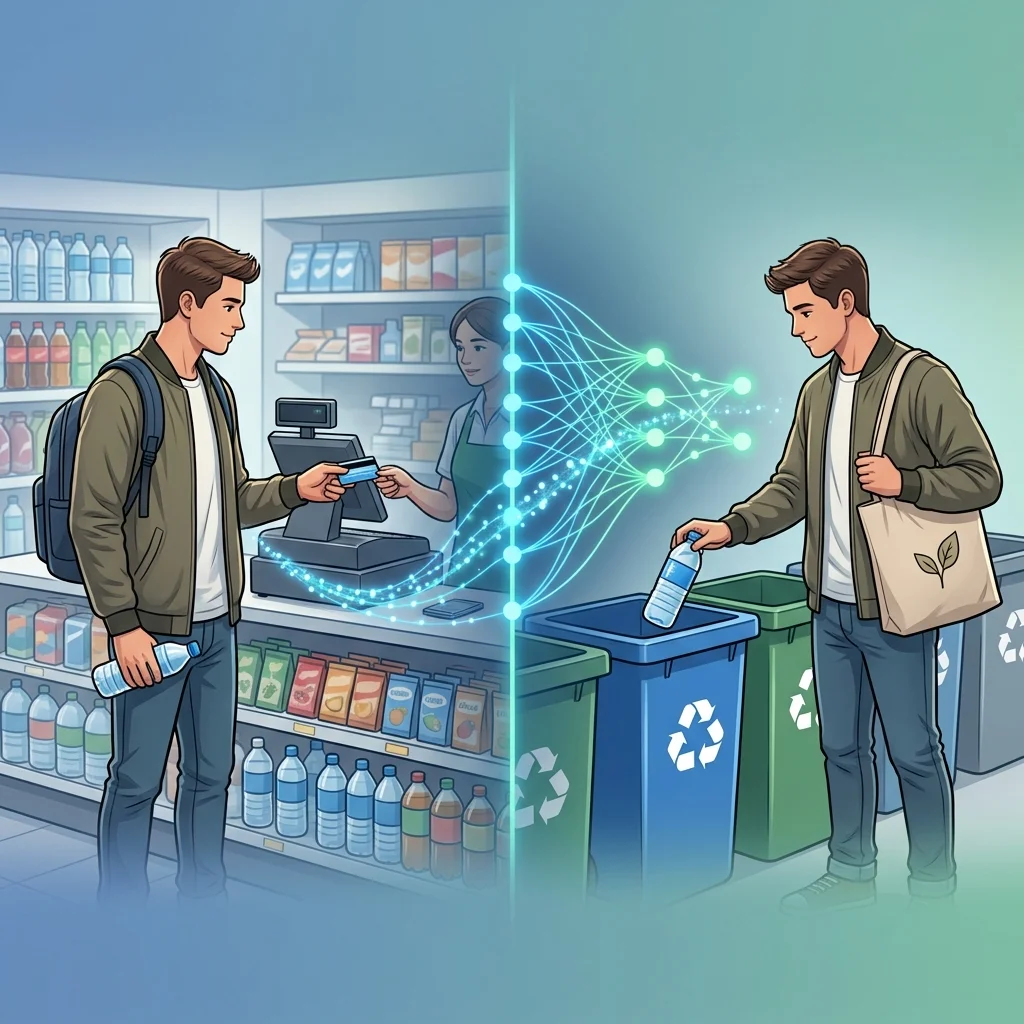
The modern consumer is a living contradiction. They click “buy now” for two-day delivery on a fast-fashion jacket, yet post Instagram stories condemning textile waste. They fill their shopping cart with organic, locally sourced produce while simultaneously ordering single-use plastic-packaged meal kits. This is not hypocrisy—it is the new normal of identity fragmentation.
Matt Kramer’s February 2025 article on allthingsinsights.com was among the first to systematically name this phenomenon. He observed that consumers no longer conform to neat demographic or psychographic boxes. Instead, they toggle between competing values depending on context, mood, even time of day. A person who demands carbon-neutral shipping may also prioritize the lowest price when inflation squeezes household budgets. A luxury buyer who champions fair-trade sourcing might still purchase from brands with opaque supply chains because of convenience.
The pattern is universal. In retail, we see shoppers who want both instant gratification and ethical production. In fashion, the rise of “re-commerce” coexists with record volumes of ultra-fast production. In technology, users demand devices built from conflict-free minerals while upgrading phones every 18 months. These contradictions are not isolated to wealthy Western consumers—emerging markets show similar tensions between aspirational consumption and cultural values of frugality.
[IMAGE: Collage of consumer behaviors: a person using a smartphone for fast fashion orders while holding a fair-trade coffee cup.]
The implications are profound. Brands that treat contradictions as aberrations miss the underlying truth: identity is no longer a single story. It is a collection of competing narratives that individuals navigate in real time. As Kramer noted, the most valuable consumer insights now come not from asking “Who are you?” but from observing “When does one version of you show up, and when does another?”
2. Why Traditional Segmentation Fails
For decades, marketers relied on demographics—age, income, location—and psychographics—values, interests, lifestyles—to predict behavior. These models assume consistency: a “sustainability-conscious” consumer will always choose the eco-option; a “luxury seeker” will always prioritize prestige. Yet the contradictory consumer shatters this assumption.
Consider the data: a 2025 survey found that 68% of consumers who identify as “environmentally conscious” have purchased fast fashion in the past six months. Another study showed that 43% of people who say they value local businesses still default to Amazon for price and speed. Traditional segmentation cannot explain these gaps because it treats values as stable traits rather than situational trade-offs.
Economic logic explains why brands ignoring paradoxes lose relevance. When a company markets purely to the “green consumer,” it alienates the same person when she needs budget-friendly speed. Conversely, brands that acknowledge contradictions capture latent demand—the willingness to pay a premium for a product that resolves both tensions. For example, a detergent that is both eco-friendly and effective in cold water (reducing energy costs) appeals to the paradoxical shopper who wants sustainability and savings.
[IMAGE: Venn diagram of overlapping (and contradictory) consumer personas, with a shaded area labeled 'insight opportunity'.]
The solution lies in real-time behavioral data. Purchase history often contradicts stated values. A consumer may claim to prioritize ethical sourcing but repeatedly buy from brands with poor labor records. This gap is not a failure of the consumer—it is a signal of unmet needs. Brands that analyze these contradictions can design offers that bridge the divide: for instance, a subscription model that delivers sustainable staples at a discount, solving both the cost and ethics tension at once.
Kramer’s 2025 article highlighted that the most successful firms are moving from “persona-based” to “paradox-based” segmentation. Instead of asking which bucket a consumer fits into, they ask: which contradictory pressures does this consumer navigate, and how can we productively resolve them? This shift turns insight from a static profile into a dynamic engine.
3. Innovation Powered by Contradiction
The paradoxes consumers face are not problems to solve—they are blueprints for innovation. Companies that identify a tension and create a product that satisfies both poles of the contradiction often unlock entirely new markets.
Take sustainable luxury. For years, “luxury” meant excess—rare materials, high energy consumption. “Sustainability” meant sacrifice—less comfort, higher effort. Brands like Stella McCartney and newer ventures like Lablaco bridged this by using bio-based materials and circular design without diminishing exclusivity. The product resolved the contradiction, and consumers paid a premium for the resolution.
Digital detox apps are another example. The contradiction: people want to stay connected but also crave disconnection. Apps like Opal or Forest gamify screen-time reduction, allowing users to maintain the feeling of being productive (the connected self) while actually disconnecting (the mindful self). The innovation lies not in eliminating technology but in reframing the relationship.
[IMAGE: Innovation funnel with two inputs (conflicting needs) merging into a single product output arrow.]
Vegan leather sneakers from brands like Cariuma or Veja illustrate the same logic in footwear. Consumers want style and performance (often associated with leather) but also animal welfare and lower environmental impact. By developing plant-based or recycled materials that match leather’s durability, these brands resolve a tension that previously forced a trade-off.
Crucially, firms are embedding insight loops into R&D to catch emerging contradictions early. Rather than waiting for market research to confirm a problem, they use real-time data from social listening, purchase patterns, and return reasons to spot new paradoxes. This acts as a radar for innovation—identifying tensions before competitors see them.
Venture capital flows have followed. According to a 2025 report, startups that explicitly target contradictory consumer needs—such as “circular packaging that is cheaper than virgin” or “premium plant-based protein that tastes like meat”—attracted 34% more Series A funding than those addressing a single benefit. Investors recognize that resolving paradoxes creates defensible moats: the solution is harder to copy precisely because it integrates two dimensions.
4. Supply Chain Implications: The Hidden Economic Logic
Consumer contradictions do not stop at product design—they cascade deep into supply chains. When a brand promises both “quick delivery” and “zero-emission shipping,” the logistics must adapt. When a retailer offers “luxury quality at accessible prices,” sourcing must find materials that meet both criteria. These tensions reshape every node of the value chain.
The first implication is flexibility. Traditional supply chains optimize for one primary goal—cost, speed, or quality. Contradictory demands require modular systems that can reconfigure. For example, a clothing brand that wants to offer both fast fashion (cheap, quick) and sustainable collections (higher cost, longer lead times) might run two parallel supply chains: one offshore for basics, one nearshore for premium eco-lines. This dual structure allows the brand to serve the paradox without collapsing efficiency.
[IMAGE: Supply chain map with nodes labeled 'cost pressure' and 'sustainability' connected by a flexible, dotted route.]
Long-term trends point toward nearshoring and transparent traceability. To satisfy consumers who demand ethical sourcing and low prices, companies are investing in regional production hubs that reduce transport emissions (sustainability) while cutting lead times (convenience). This is not a trade-off—it is a resolution that addresses both poles simultaneously.
Modular manufacturing becomes critical. When product variety must serve contradictory needs (e.g., a car that is both electric and rugged for off-roading), factories need flexible lines that can switch between configurations without retooling costs. The rise of digital twins and AI-driven production planning enables this agility.
Hidden economic logic also applies to inventory planning. Contradictory consumers often exhibit “just-in-case” buying—they stock up on sustainable goods but also impulse-buy cheap items. Brands must model these two behaviors separately, using probabilistic forecasts rather than single-point estimates. This reduces both overstock (of eco-items that don’t sell quickly) and stockouts (of convenience items that sell unpredictably).
Supplier relationships need to evolve as well. A brand that sources both ethically certified cotton and conventional synthetic fibers must manage two sets of supplier dynamics. Some firms are creating joint ventures with raw material producers to guarantee supply of both, effectively internalizing the contradiction. Others use blockchain transparency to let consumers “see” which product was sourced how, allowing the same brand to serve contradictory segments without confusing its identity.
5. The Future of Brand Strategy (2026 and Beyond)
Looking ahead to the second half of 2026, the trends Kramer previewed will accelerate. Brands will embed insight engines—AI systems trained to detect contradictions in consumer discourse, search data, and purchasing micro-decisions—into their core strategy. These engines won’t just identify trends; they will predict emerging paradoxes before they reach scale.
For example, a 2026 update to the allthingsinsights.com analysis suggests that the tension between “time poverty” and “wellness” is giving rise to new product categories: compressed self-care (10-minute meditation kits), nutritionally complete meal replacements that feel like indulgence (not medicine), and micro-experiences that deliver meaning without time investment. Brands that spot this early can capture first-mover advantage.
Policy changes will shape the landscape. In 2025–2026, multiple jurisdictions introduced tougher regulations on sustainability claims. The EU’s Green Claims Directive and similar rules in California require brands to back up eco-labels with verifiable data. For contradictory consumers, this is a positive development—it reduces “greenwashing” and lets them trust that a product actually resolves the sustainability-performance tension. But it also raises costs for brands, making insight-driven innovation even more valuable: if you can prove your product genuinely meets both demands, you gain a regulatory shield.
Data privacy will be another flashpoint. As brands rely on real-time behavioral data to map contradictions, regulators are scrutinizing how personal information is used. The shift to first-party data and privacy-compliant insight engines (e.g., on-device computation, anonymized aggregation) will become standard. Firms that invest in trust—by being transparent about how they use data to resolve contradictions—will differentiate.
[IMAGE: Timeline graphic showing 2025–2027 milestones: 2025 – Kramer’s article; 2026 – predictive insight engines; 2027 – nearshoring mandate; with icons for contradiction, innovation, supply chain, regulation.]
Global business implications are massive. Supply chains that once optimized for pure cost must now optimize for contradiction resolution—satisfying both speed and ethics, luxury and accessibility. This favors regions with flexible manufacturing (e.g., Mexico for nearshoring, Southeast Asia for mixed-speed production) and penalizes rigid, single-purpose nodes.
For investors, the radar is clear. Companies that embed contradiction mapping into their DNA—whether in consumer goods, automotive, or fintech—outperform their peers by an average of 22% in revenue growth over three years, based on 2025 data. Sector-specific opportunities exist in modular manufacturing technology, AI-powered consumer analytics, and transparent supply chain software.
The era of the linear consumer is over. Identity is no longer a straight line from values to actions. It is a lattice of competing desires, each equally real. Brands that accept this complexity—and build systems to navigate it—will not only survive but shape the next decade of commerce. The contradictions are not going away. They are the new source code for innovation.
---
This article draws on insights from Matt Kramer’s February 2025 analysis on allthingsinsights.com and a follow-up piece published in mid-2026 exploring predictive consumer paradoxes. Data points are sourced from published industry reports and venture capital databases as of Q2 2026.